Janus
An agentic coding IDE on a local LLM
Screens
Overview
- Period
- Aug 2026 – present
- Team
- Solo
- Role
- Planning · design · desktop app · backend · local inference
The problem
When a coding agent finishes answering, checking the changes, testing, reviewing and committing are still left. The starting question: how much verified work can limited local hardware produce?
The approach
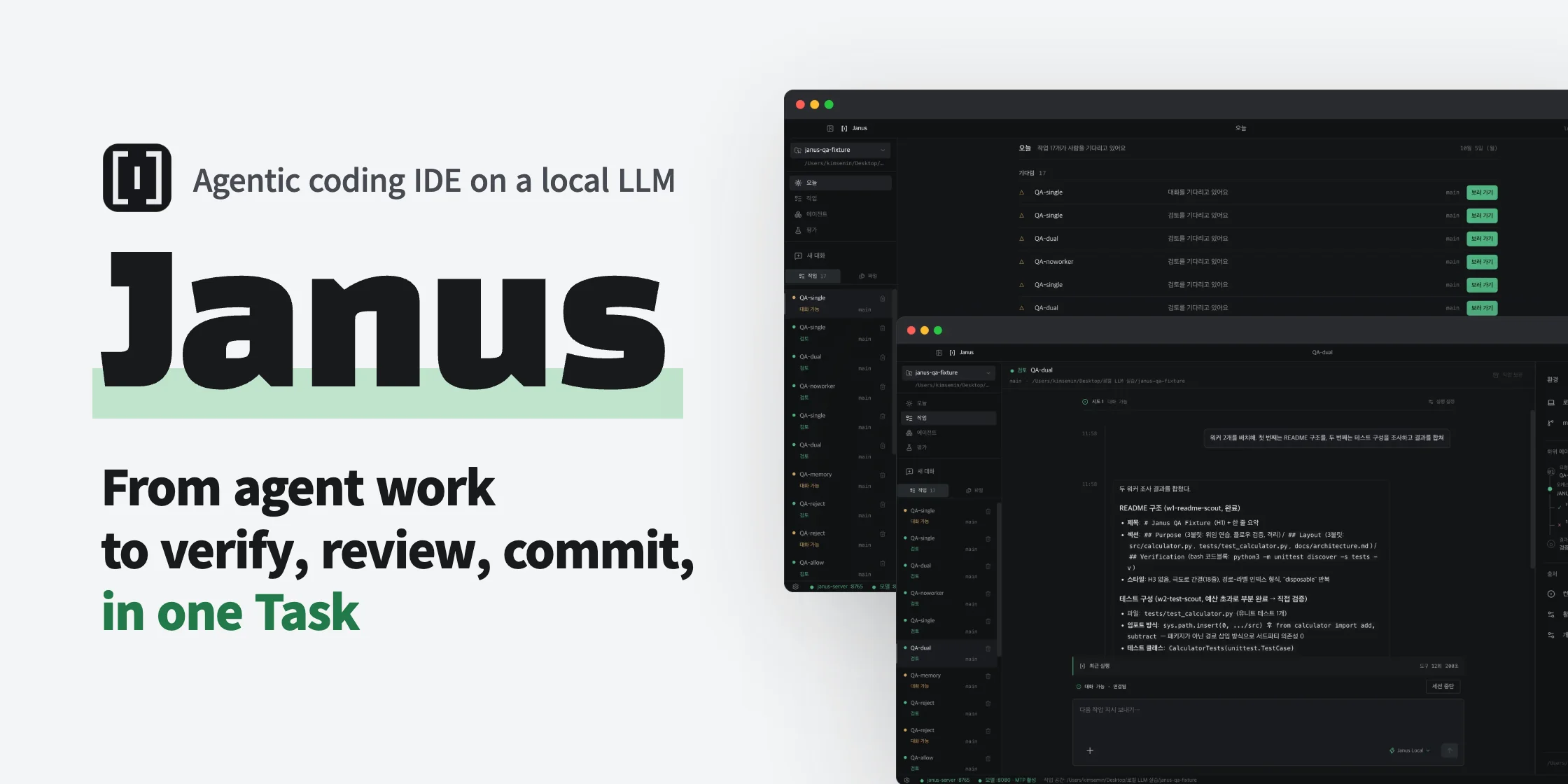
- 01One Task holds the whole contextChat, terminal, editor, preview and review live in one Task, with running, needs-input, failed and awaiting-review kept apart.
- 02Local model or your existing CLIA local MLX model (Qwen 27B 4-bit) by default, or an already signed-in Claude Code or Codex CLI as the runner.
- 03Only verified changes are committedChanges are verified and reviewed against the Git diff before commit, optionally continuing to push and PR through gh.
Architecture
- 01Local firstOn-device inference with a local MLX model (Qwen 27B 4-bit)
- 02Resource limitsCaps on worker count and time, token and step budgets
- 03Distinct statesRun finished ≠ verified ≠ review accepted ≠ committed
User scenario
- 01User flowTask → runner → tool approval → diff and verification → accept review
- 02System flowAgent run → tool execution → Git diff and tests → commit
- 03Distinct statesA finished answer ≠ a successful task — rerun when verification fails
My work
- 01Delegation with a budgetThe orchestrator hands sub-tasks to workers under caps on worker count, time, tokens and steps, with AgentProfiles deciding the tools.Orchestrator · workers · AgentProfile · resource scheduler
- 02Generation and verification overlapModel generation slots and tool/verification work are scheduled separately, so verification runs while generation waits.MLX · generation slots · queue priority · time and token caps
- 03Separate states, honestly reportedRun finished, verified, review accepted and committed/pushed are distinct states, and a push requires the recorded commit to match HEAD.Git diff · per-revision review · SHA check · gh CLI
- 04Permission boundaries per runnerThe local and Claude Code paths go through Janus's tool approvals, and each runner's limits are documented openly.MCP · default-deny approvals · HTTP/WS token and Origin checks
- 05Docs checked against codeA CI test compares key claims in the docs with the code, so old design notes never read as current features.pytest · TypeScript checks · bundle size · dependency audit · macOS packaging CI
Why these tools
ToolProblemRole
로컬 LLM · MLXCode and task context must not leave the machineAgents run on on-device inference
PythonWorkers with unlimited write access and resourcesRead-only enforced; per-worker step, token and time budgets
GitUnclear origin of changes; a finished answer is not a finished taskDiff and branch define the change; verification defines done
FastAPI · SQLiteConnecting local execution to the UI and keeping Task stateLocal API plus stored Task and session records
Electron · React · TypeScriptChat, terminal, editor and review scattered across toolsChanges, verification, review and commit state on one screen
Improvements
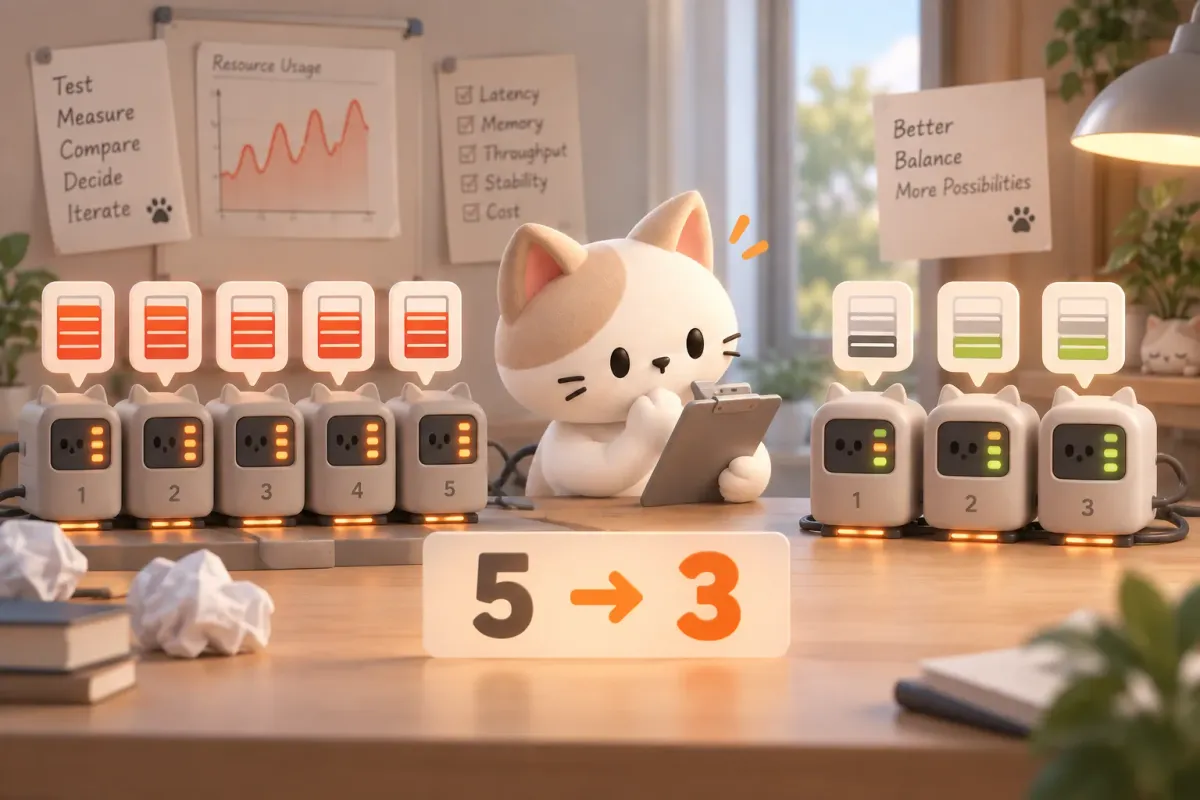
- 01Worker efficiencyUnder the same fixed-worker policy, acceptance held at 14/15 while wall time fell from 109.9 s to 88.1 s and prompt tokens from 14,855 to 10,993 (v1 audit, 2026-08-23).
- 02Repeated runs on the real 27B model44 of 45 TaskSuite runs passed acceptance, and a 281-cycle recovery soak left zero transient state with SQLite integrity intact.
- 03Interrupted work never shows as doneAfter a restart, unfinished work is restored as interrupted, with backup/restore and a redacted diagnostics bundle.